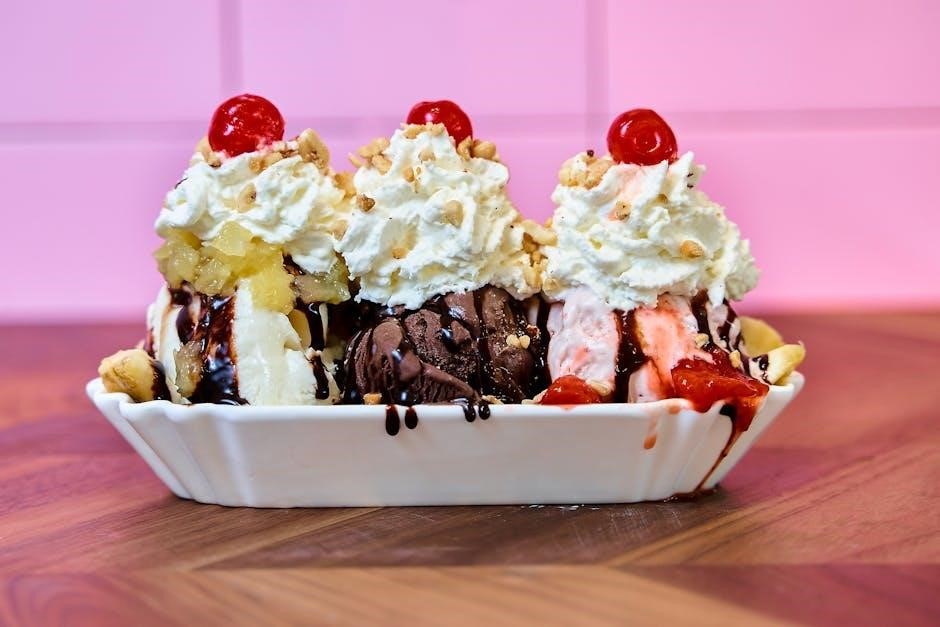
Ice cream, a globally cherished dessert, boasts a fascinating history, evolving from ancient frozen treats to today’s creamy indulgence. This overview explores its delightful origins and cultural impact.
What is Ice Cream?
Ice cream is a frozen dessert typically made from dairy products, such as milk and cream, combined with sweeteners like sugar or honey, and often accompanied by flavorings. These flavorings can range from simple vanilla to complex combinations of fruits, nuts, and chocolates. The fundamental characteristic defining ice cream is its delightfully smooth and creamy texture, achieved through a carefully controlled freezing process that incorporates air.
Historically, early versions involved ice and flavorings, but modern ice cream relies on precise ingredient ratios and techniques. It’s a versatile treat enjoyed worldwide, with countless variations reflecting local tastes and culinary traditions. Beyond its deliciousness, ice cream holds a significant cultural place, often associated with celebrations and joyful moments.
The Global Appeal of Ice Cream
Ice cream’s universal appeal transcends cultural boundaries, manifesting in diverse forms across the globe. From Italy’s rich gelato to India’s dense kulfi, and Japan’s chewy mochi ice cream, each nation has embraced and adapted this frozen delight. Even Turkey boasts dondurma, known for its elastic texture. This widespread adoration stems from ice cream’s ability to offer a moment of simple pleasure, adaptable to local palates and ingredients.
The dessert’s popularity isn’t merely about taste; it’s woven into social traditions and celebrations worldwide. Whether a scoop on a summer day or a celebratory sundae, ice cream consistently evokes positive emotions and shared experiences, solidifying its global status as a beloved treat.
A Historical Journey of Ice Cream
Ice cream’s story spans millennia, originating with ancient flavored ices in Persia, China, and Rome, evolving through cultural exchange and innovation over centuries.
Ancient Origins: Persia and Early Frozen Treats (550 BC ⸺ 2nd Century AD)
The earliest documented roots of ice cream trace back to ancient Persia around 550 BC, where chilled sweetened beverages were enjoyed. These weren’t ice cream as we know it, but represent a crucial precursor – utilizing ice harvested from mountains and stored in ice houses. Persian records from the 2nd century AD detail sweetened drinks cooled with ice, demonstrating a sophisticated understanding of preserving coldness.
This practice of chilling drinks spread, influencing culinary traditions in neighboring regions. While not yet the creamy dessert, these early frozen treats laid the groundwork for future innovations. The concept of combining sweetness with coldness was a pivotal step, marking the genesis of a beloved global treat, and showcasing early attempts at creating refreshing delicacies.
China’s Contribution: Early Flavored Ices (3000 BC)
Food historians frequently credit China with creating the earliest versions of flavored ices, potentially as early as 3000 BC. These weren’t ice cream in the modern sense, but mixtures of ice and flavorings – fruits, juices, and perhaps even honey – offering a refreshing treat to royalty and the elite. This represents a significant leap forward, moving beyond simply chilling beverages to actively flavoring frozen water.
While details are scarce, the Chinese innovation demonstrates an early understanding of combining cold temperatures with palatable flavors. This practice likely involved laborious ice harvesting and storage techniques. Though the exact recipes remain unknown, China’s contribution is considered foundational to the development of frozen desserts worldwide, influencing culinary practices for millennia.
Roman Era: Snow-Cooled Desserts (1st Century AD)
During the Roman Empire, around the 1st century AD, resourceful cooks began utilizing ice and snow to create chilled desserts. A cookbook from this period features recipes for sweet treats sprinkled with snow, demonstrating a sophisticated approach to cooling and flavoring food. Emperor Nero reportedly enjoyed ice flavored with fruit toppings, showcasing a penchant for these early frozen delicacies among the Roman aristocracy.
However, obtaining ice was a logistical challenge, requiring expeditions to mountainous regions or relying on ice harvested during winter and stored in ice houses. These snow-cooled desserts weren’t ice cream as we know it, but represent a crucial step in the evolution of frozen treats, blending practicality with culinary creativity.
Popular lore credits Marco Polo with introducing flavored ices to Italy during the 13th century, after his travels to the Far East. He supposedly brought back recipes for water ices, inspired by the desserts he encountered in China. These early Italian versions, however, differed significantly from modern ice cream, lacking the creamy texture achieved with dairy.
It’s important to note that the extent of Polo’s influence is debated by food historians; some question whether he was truly the primary conduit for these culinary ideas. Nevertheless, his journeys coincided with a growing interest in exotic flavors and techniques within Italian cuisine, paving the way for future ice cream innovations.
The Evolution of Ice Cream Making
Early ice cream production relied on manual techniques and natural cooling methods, gradually evolving with innovations like salt usage and the development of ice houses.
Early Methods of Ice Cream Production
Initially, creating frozen desserts was a laborious process, heavily reliant on accessing natural ice and snow. Ancient civilizations, like the Persians and Romans, utilized ice brought down from mountains, mixing it with fruit juices and sweeteners to create rudimentary chilled treats. These early methods lacked the consistent freezing capabilities we have today, resulting in grainy textures rather than the smooth creaminess of modern ice cream.
The process involved layering snow or ice with flavorings, a technique demanding significant physical effort and seasonal availability. Before mechanical refrigeration, maintaining a sufficiently cold temperature was a constant challenge. Innovations were slow, and the resulting desserts were often reserved for the elite due to the difficulty and expense of production. These early attempts, however, laid the groundwork for future advancements in ice cream making.
The Role of Salt in Freezing
A pivotal discovery in ice cream production was understanding the effect of salt on freezing temperatures. Adding salt to ice lowers its freezing point, creating a significantly colder mixture than ice alone. This principle, though not fully understood initially, allowed for more efficient and consistent freezing of the ice cream base. Early producers found that a salt-ice bath could achieve temperatures low enough to properly freeze the mixture, improving texture and consistency.
The use of salt enabled a more controlled freezing process, moving beyond reliance on naturally cold temperatures. This innovation was crucial for expanding ice cream production and making it more accessible. It represented a significant step towards the development of reliable freezing techniques, paving the way for future advancements in ice cream technology.
The Development of Ice Houses
Prior to mechanical refrigeration, preserving ice was essential for consistent ice cream production. This led to the development of ice houses – structures designed to store ice harvested during winter for use throughout the year. These buildings were often partially underground, utilizing the earth’s natural insulation to maintain low temperatures. Thick walls and careful insulation techniques were employed to minimize melting.
Ice houses represented a significant logistical advancement, allowing for a continuous supply of a crucial ingredient. Access to stored ice enabled more frequent and reliable ice cream making, moving beyond seasonal limitations. The efficiency of ice house construction directly impacted the availability and affordability of this increasingly popular dessert.
The Birth of Modern Ice Cream
The 18th and 19th centuries witnessed ice cream’s transformation in America, with the first documented record in 1744 and the rise of dedicated parlors.
The First Ice Cream in America (1744)
The earliest documented mention of ice cream in America appears in a letter written in 1744 by a guest of Maryland Governor William Bladen. This guest detailed enjoying a creamy ice cream dessert during a dinner party, marking a significant moment in American culinary history. While not the invention of ice cream itself – as frozen desserts existed prior – it represents the first known instance of its enjoyment within the colonies.
This initial introduction was likely reserved for the elite, given the complexity of creating ice cream at the time. Access to ice was limited, and the process was labor-intensive. Nevertheless, this event signaled the beginning of ice cream’s journey to becoming a beloved treat for all Americans, laying the groundwork for future innovations and widespread popularity.
The Rise of Ice Cream Parlors (19th Century)
The 19th century witnessed a dramatic shift in ice cream’s accessibility, fueled by technological advancements and changing social habits. The advent of reliable ice harvesting and improved refrigeration techniques allowed for more consistent production and distribution. This led to the emergence of dedicated ice cream parlors, transforming it from an exclusive delicacy to a widely enjoyed treat.
These parlors quickly became social hubs, offering a welcoming atmosphere for families and friends. They weren’t merely places to consume ice cream; they fostered community and provided a novel leisure experience. Soda fountains often accompanied ice cream service, further enhancing the appeal. The growth of urban centers and increased disposable income contributed significantly to this flourishing ice cream culture.
Nancy Johnson’s Hand-Cranked Freezer (1843)
A pivotal moment in ice cream history arrived in 1843 with Nancy Johnson’s patent for a hand-cranked ice cream freezer. This ingenious invention revolutionized home ice cream making, moving it beyond the realm of laborious, skill-intensive processes. Johnson’s design featured a wooden tub containing a metal canister, with a hand crank turning a dasher inside.
This mechanism effectively scraped the frozen ice cream from the sides of the canister, incorporating air and creating a smoother, more consistent texture. Prior methods relied on salt-ice mixtures and manual stirring, yielding inconsistent results. Johnson’s freezer democratized ice cream production, enabling countless households to enjoy this delightful dessert with greater ease and quality.
Ice Cream Around the World
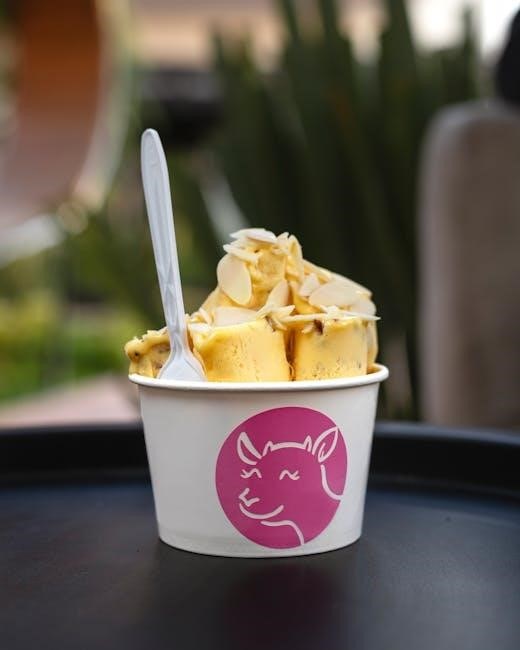
Ice cream transcends borders, appearing as gelato in Italy, kulfi in India, and mochi in Japan—each reflecting unique flavors and cultural traditions globally.
Gelato (Italy)
Gelato, Italy’s renowned frozen dessert, differs significantly from American ice cream in several key aspects. Traditionally, gelato utilizes more milk than cream, resulting in a lower fat content and a denser, more intensely flavored product. The slower churning process incorporates less air, contributing to its signature smooth texture and concentrated taste.
Italian gelato artisans prioritize fresh, seasonal ingredients, showcasing regional specialties and vibrant flavors. Unlike mass-produced ice cream, gelato is often made in small batches daily, ensuring optimal quality and freshness. Common flavors include pistachio, hazelnut, stracciatella (vanilla with chocolate shavings), and various fruit sorbettos. Experiencing gelato in Italy is a cultural immersion, a testament to the country’s dedication to culinary excellence and simple pleasures.
Kulfi (India)
Kulfi, a traditional Indian frozen dessert, holds a special place in the country’s culinary heritage. Unlike ice cream, kulfi isn’t churned during the freezing process, resulting in a dense, creamy texture and a unique, slightly granular consistency. It’s traditionally made by slowly evaporating sweetened milk, often using indirect heat, until it thickens considerably.
Common kulfi flavors include cardamom, pistachio, mango, and saffron, often adorned with chopped nuts. Historically, kulfi was prepared using natural refrigerants like snow brought down from the Himalayas. Today, modern refrigeration is used, but the traditional slow-cooking method remains central to its creation. Kulfi represents a delightful blend of tradition, flavor, and texture, deeply rooted in Indian culture.
Mochi (Japan)
Mochi ice cream, a beloved Japanese confection, uniquely blends traditional mochi (rice cake) with flavorful ice cream. This delightful treat consists of a small ball of ice cream encased in a soft, chewy mochi shell, creating a captivating textural contrast. The mochi itself is made from glutinous rice flour, pounded into a pliable consistency.
Popular mochi ice cream flavors range from classic vanilla and strawberry to more adventurous options like green tea and red bean. Originally, mochi was a ceremonial food in Japan, but it evolved into a popular street food and dessert. The combination of the cool ice cream and the soft mochi offers a uniquely satisfying and refreshing experience, showcasing Japanese culinary innovation.
Dondurma (Turkey)
Dondurma, Turkish ice cream, stands apart due to its uniquely elastic and chewy texture, a result of incorporating salep, a flour made from orchid roots, and mastic, a resin from the mastic tree. This gives it a remarkable resistance to melting, allowing for playful presentation by vendors. Skilled dondurma sellers often perform tricks, stretching and swirling the ice cream before serving it.
Traditionally flavored with milk, sugar, and salep, modern variations include pistachio, rosewater, and other local ingredients. The origins of dondurma trace back centuries, with its production methods carefully guarded. It’s more than just a dessert; it’s a cultural experience, embodying Turkish hospitality and artistry, offering a delightful and interactive treat.
The Science of Ice Cream
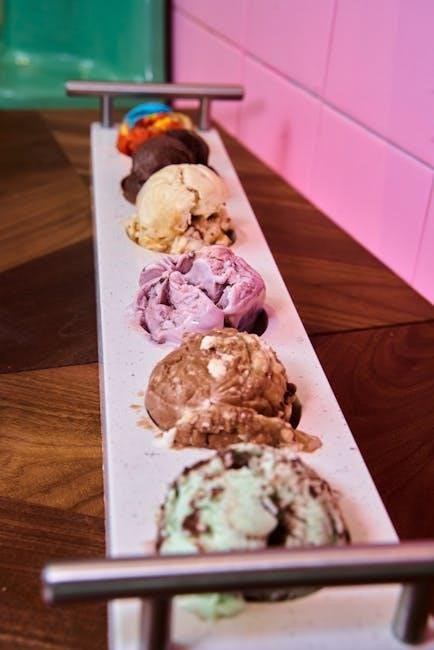
Ice cream’s delightful texture relies on a precise balance of fat, sugar, and air. Understanding these components reveals the scientific principles behind this frozen delicacy.
The Importance of Fat Content
Fat plays a crucial role in defining ice cream’s texture and mouthfeel. Higher fat content generally results in a smoother, creamier product, as fat interferes with ice crystal formation. This interference leads to smaller ice crystals, contributing to a luxurious, less grainy sensation on the palate. Conversely, lower-fat ice creams tend to be icier, lacking the richness associated with premium varieties.
The type of fat also matters; milkfat from cream is preferred for its flavor and emulsifying properties. Fat contributes significantly to the overall flavor profile, carrying and enhancing other flavor compounds. Regulations often dictate minimum fat percentages for products labeled as “ice cream,” distinguishing them from frozen desserts with lower fat levels. Achieving the optimal fat balance is essential for creating a satisfying ice cream experience.
The Role of Sugar in Texture
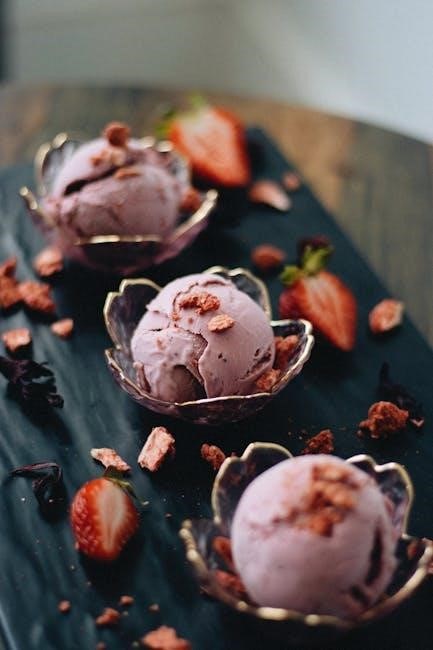
Sugar isn’t merely for sweetness in ice cream; it profoundly impacts texture. It lowers the freezing point of the mixture, preventing it from becoming a solid block of ice. This results in a scoopable consistency. Sugar also contributes to the ice cream’s body and mouthfeel, influencing how it melts in your mouth. Different types of sugar, like sucrose or glucose, affect freezing point depression and crystallization differently.
Too little sugar leads to a hard, icy product, while excessive amounts can result in a soft, syrupy texture. Sugar interacts with water molecules, hindering large ice crystal formation, and contributing to a smoother final product. Balancing sugar content is vital for achieving the desired creamy texture and overall sensory experience.
Air Incorporation and Overrun
Air incorporation is crucial in ice cream making, significantly impacting its texture and density. During the freezing process, air is whipped into the mixture, creating what’s known as “overrun.” Overrun is expressed as a percentage, representing the increase in volume due to incorporated air; A higher overrun results in a lighter, fluffier ice cream, while lower overrun yields a denser, richer product.
The amount of air incorporated affects the ice cream’s scoopability and mouthfeel. Too much air can lead to a foamy texture, while insufficient air results in a heavy, icy consistency. Controlling overrun is a key aspect of ice cream production, influencing both quality and cost, as air contributes to volume without adding significant weight.

Types of Ice Cream
Ice cream varieties abound, including Philadelphia, French, soft serve, and frozen custard, each distinguished by unique ingredients and production methods for diverse palates.
Philadelphia-Style Ice Cream
Philadelphia-style ice cream, a classic American variation, distinguishes itself through its simplicity and focus on pure flavor. Unlike its French counterpart, it omits egg yolks from the base recipe, resulting in a lighter, cleaner taste and texture. This style relies heavily on the quality of the cream and sugar, allowing the primary flavors to truly shine through.
The absence of egg yolks also contributes to a slightly icier consistency compared to richer, custard-based ice creams. Historically, this style was favored for its ease of production and affordability, making it a popular choice in early American ice cream parlors. Modern adaptations often emphasize locally sourced ingredients and innovative flavor combinations, maintaining the core principle of showcasing unadulterated taste.
French-Style Ice Cream
French-style ice cream, often referred to as “French custard” or “custard-style,” is renowned for its exceptionally rich and creamy texture. The key difference lies in the inclusion of egg yolks in the base, creating a custard that’s then frozen. These yolks contribute significant fat content, resulting in a smoother, denser, and more luxurious mouthfeel compared to Philadelphia-style ice cream.
The custard base also allows for a more stable emulsion, preventing ice crystal formation and enhancing the overall quality. Traditionally, French ice cream makers prioritize high-quality ingredients and meticulous technique. This style often serves as a canvas for complex and sophisticated flavor profiles, showcasing the artistry of the ice cream maker. It’s a truly decadent experience.
Soft Serve Ice Cream
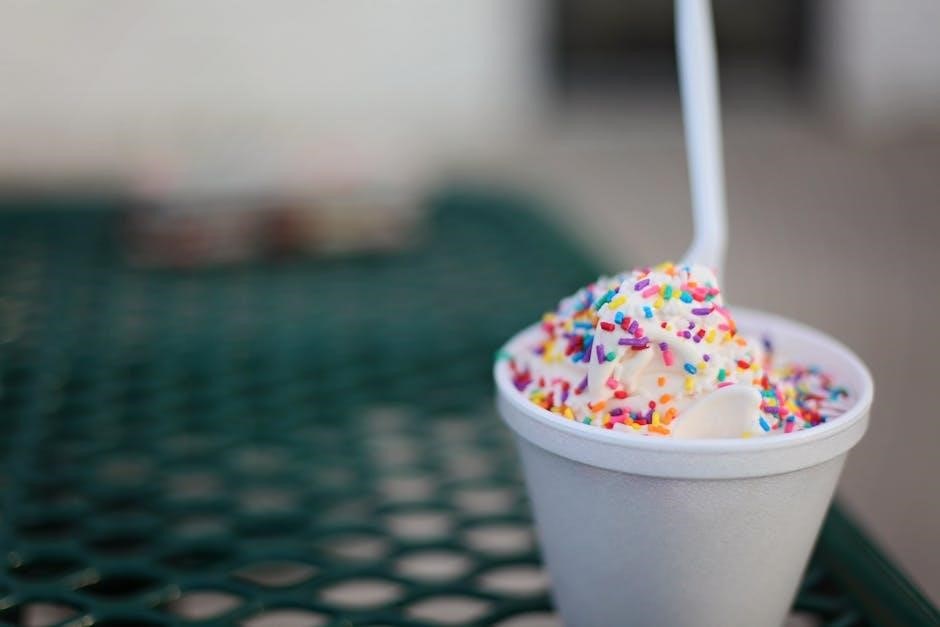
Soft serve ice cream distinguishes itself through its unique texture – softer, lighter, and airier than traditional hard-packed ice cream. This difference stems from a higher overrun, meaning more air is incorporated during the freezing process, typically between 33-60%. Specialized machines continuously freeze the mix while simultaneously incorporating air, delivering it directly to the dispensing nozzle.
Unlike hard ice cream, soft serve is served at a warmer temperature, contributing to its characteristic softness. It’s often dispensed in a swirl pattern, a visual cue to its distinct production method. Commonly enjoyed in cones, soft serve is a popular choice for its convenience and immediate gratification, representing a casual and delightful treat.
Frozen Custard
Frozen custard, often called “the world’s creamiest ice cream,” differs significantly from standard ice cream due to its inclusion of egg yolks. These yolks contribute to a denser, smoother, and richer texture, offering a uniquely luxurious mouthfeel. Legally, to be labeled as frozen custard in the US, the mixture must contain at least 1.4% egg yolk solids by weight.
The custard base is typically made by slowly tempering egg yolks with a hot cream and sugar mixture, then chilling and freezing it. This process creates a remarkably stable emulsion, resulting in a product that melts more slowly and maintains its texture longer. Frozen custard is often served immediately after freezing for optimal creaminess.

Ice Cream Ingredients and Production
Ice cream production involves carefully blending dairy, sugar, flavors, and stabilizers. Quality control is crucial throughout the process, ensuring a consistently delicious final product.
Common Ice Cream Ingredients
Ice cream’s delightful texture and flavor stem from a carefully selected blend of ingredients. Dairy forms the foundation, typically comprising milk and cream, providing essential fats for richness. Sugar isn’t merely for sweetness; it significantly impacts the final texture, lowering the freezing point and preventing excessive ice crystal formation. Flavorings, ranging from classic vanilla to exotic fruits and chocolates, define the unique character of each variety.
Stabilizers, like guar gum or locust bean gum, enhance smoothness and prevent ice crystal growth during storage. Emulsifiers, such as egg yolks or lecithin, help bind fat and water, creating a consistent, creamy consistency. Air, incorporated during churning, contributes to the light and airy texture we associate with quality ice cream. The precise proportions of these ingredients are critical for achieving the desired quality and sensory experience.
The Ice Cream Making Process
Ice cream production begins with blending the base ingredients – dairy, sugar, and stabilizers – to create a homogenous mix. This mix is then pasteurized to eliminate harmful bacteria and homogenized to ensure a smooth texture. Following pasteurization, the mix is aged, allowing fats to crystallize and improve whipping properties.
Next comes the crucial freezing stage, where the mix is rapidly cooled while simultaneously incorporating air. This churning process prevents large ice crystal formation, resulting in a creamy consistency. Finally, the ice cream is hardened, typically through blast freezing, to achieve its final form and ensure long-term stability. Throughout, strict quality control measures are implemented.
Quality Control in Ice Cream Production
Ice cream quality control is paramount, encompassing every stage from ingredient sourcing to final product inspection. Raw materials undergo rigorous testing for purity, fat content, and bacterial load. Throughout the mixing and freezing processes, temperature monitoring and viscosity checks ensure consistency.
Finished products are assessed for overrun (air incorporation), texture, flavor, and microbial safety. Sensory evaluations, involving trained panels, play a vital role in maintaining desired taste profiles. Regular audits of production facilities and adherence to strict hygiene standards are essential. Consistent quality builds consumer trust and brand reputation.
Ice Cream and its Cultural Significance
Ice cream symbolizes celebration and joy across cultures, appearing in popular culture and traditions worldwide, reflecting unique flavors and societal values.
Ice Cream as a Symbol of Celebration
Ice cream frequently represents joyous occasions and celebratory moments globally. From birthday parties and weddings to simple summer gatherings, its presence elevates the festive atmosphere. This association stems from its inherently pleasurable nature – a sweet, cool treat offering instant gratification. Historically, ice cream was a luxury, reserved for special events, reinforcing its connection to celebration.
The act of sharing ice cream fosters a sense of community and togetherness, strengthening bonds during happy times. It’s a universal language of happiness, transcending cultural boundaries. Even a simple scoop can transform an ordinary day into something memorable, solidifying ice cream’s role as a symbol of pure enjoyment and festivity.
Ice Cream in Popular Culture
Ice cream has permeated popular culture, appearing frequently in films, literature, and music as a symbol of comfort, nostalgia, and simple pleasures. Iconic scenes often feature characters enjoying ice cream during moments of reflection or connection. Numerous songs reference ice cream, associating it with carefree summer days and youthful romance.
The dessert’s visual appeal also makes it a popular subject for art and photography. Ice cream parlors themselves have become cultural landmarks, representing a sense of community and tradition. Marketing campaigns consistently utilize ice cream’s positive imagery to evoke feelings of happiness and indulgence, cementing its place in the collective consciousness.
The Future of Ice Cream Innovation
The future of ice cream promises exciting innovations, driven by evolving consumer preferences and technological advancements. Expect to see more plant-based and dairy-free options catering to dietary needs and sustainability concerns. Unique flavor combinations, incorporating global spices and unexpected ingredients, will continue to emerge, pushing boundaries beyond traditional tastes.
Furthermore, personalized ice cream experiences, potentially created through 3D printing or customized blending, may become commonplace. Research into healthier formulations, reducing sugar content without sacrificing texture, is also a key focus. Expect advancements in packaging and delivery methods, ensuring freshness and convenience for consumers worldwide.