Honeywell T4 Thermostat Manual: A Comprehensive Guide
Welcome! This detailed manual assists users in understanding and effectively utilizing their new Honeywell T4 Programmable Thermostat, ensuring optimal home comfort and efficiency․
This guide provides step-by-step instructions for installation, programming, operation, and troubleshooting, covering both T4 and T4M models for a seamless experience․
The Honeywell T4 Programmable Thermostat represents a significant step towards enhanced home climate control and energy savings․ Designed for ease of use, this thermostat allows homeowners to efficiently manage their heating and cooling systems, optimizing comfort while minimizing energy consumption․ This manual serves as a comprehensive resource, guiding you through every aspect of your T4 thermostat, from initial setup to advanced programming features․
Whether you’re a first-time thermostat user or familiar with programmable systems, this guide provides clear, concise instructions․ It covers the core functionalities of the T4, including setting schedules, utilizing manual override options, and addressing common operational issues․ The T4 and T4M models share similar features, with this manual applicable to both, ensuring a streamlined user experience․
Understanding your thermostat’s capabilities is key to maximizing its benefits․ This introduction sets the stage for a detailed exploration of the T4’s features, empowering you to create a comfortable and energy-efficient home environment․
Understanding the T4 and T4M Models
The Honeywell T4 and T4M thermostats are both programmable models designed to provide efficient control over your home’s heating and cooling systems․ While sharing a core set of functionalities, subtle differences exist to cater to varying installation needs and system compatibility․ Both models offer programmable schedules, allowing you to customize temperature settings based on your daily routine, maximizing comfort and minimizing energy waste․
The primary distinction lies in their intended application․ The T4 is generally suited for standard heating and cooling systems, while the T4M often incorporates features for more complex setups, potentially including fan coil or electric forced air systems․ Installation procedures are largely similar, with the initial wall plate installation being identical for both models․
This manual covers both models comprehensively, highlighting any specific considerations for the T4M where applicable․ Regardless of which model you have, you’ll find detailed instructions to ensure proper setup and operation․
Key Features and Benefits
The Honeywell T4 thermostat boasts a range of features designed for user convenience and energy savings․ Programmable settings allow for customized heating and cooling schedules, adapting to your lifestyle and reducing energy consumption when you’re away or asleep․ A clear, easy-to-read display provides at-a-glance temperature information and system status․
Key benefits include precise temperature control, leading to enhanced comfort throughout your home․ The ability to create different schedules for weekdays and weekends offers maximum flexibility․ Temporary and permanent hold functions provide immediate override options when needed․ The thermostat supports various system types, ensuring broad compatibility․
Furthermore, the T4’s intuitive interface simplifies programming and operation․ By optimizing your home’s temperature management, this thermostat contributes to lower energy bills and a reduced carbon footprint, offering both economic and environmental advantages․
Installation Guide
Proper installation is crucial for optimal performance․ This section details wall plate mounting, careful wiring procedures, and the initial power-up sequence for your Honeywell T4 thermostat․
Wall Plate Installation
Begin by carefully removing your existing thermostat from the wall, noting the wire connections for later reference․ The Honeywell T4 utilizes a standard wall plate; ensure the surface is clean and level before mounting․
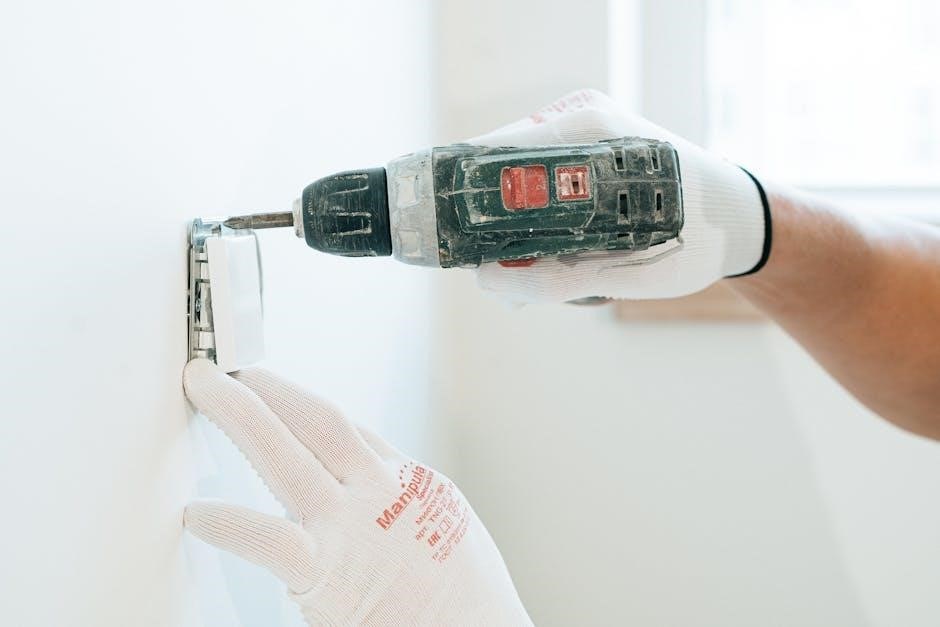
Using the provided screws, securely attach the wall plate to the wall, avoiding any existing wiring․ A crucial step is to ensure the plate is perfectly horizontal for accurate thermostat alignment․
Feed the thermostat wires through the opening in the wall plate․ Double-check that the wires are not pinched or damaged during this process․ The wall plate serves as the foundation for the thermostat, so a secure and proper installation is paramount for reliable operation․
Finally, confirm the wall plate is firmly attached and ready to receive the thermostat unit itself․
Wiring the Thermostat
Before commencing, always switch off power to your heating and cooling system at the breaker box for safety․ Carefully connect the wires to the corresponding terminals on the thermostat base, referencing your previous thermostat’s wiring or a wiring diagram․
Common terminals include Rh and Rc (power), W (heating), Y (cooling), and G (fan)․ Ensure each wire is securely inserted into its designated terminal; loose connections can cause malfunctions․
If you have a C-wire (common wire), connect it to the ‘C’ terminal for consistent power․ Without a C-wire, the thermostat may rely on battery power or require a compatibility adapter․
Double-check all connections against the wiring diagram before proceeding․ Incorrect wiring can damage your system or the thermostat itself․ Once verified, proceed to the next step․

Powering On and Initial Setup
After wiring, restore power to your HVAC system at the breaker box․ The Honeywell T4 thermostat should power on automatically, displaying a welcome screen or prompting for initial setup․
The initial setup typically involves selecting your system type – furnace, heat pump, or boiler – and configuring basic settings like language and date format․ Follow the on-screen prompts carefully to ensure accurate configuration․
The thermostat will then guide you through a series of questions to optimize performance for your specific heating and cooling system․ Accurate responses are crucial for efficient operation․
Verify that the thermostat correctly identifies your system type and displays the correct date and time․ If any discrepancies arise, consult the troubleshooting section or Honeywell’s support resources․
Programming Your T4 Thermostat
Customize your comfort! This section details how to create personalized heating and cooling schedules, setting the date, time, and temperature preferences for optimal efficiency․
Setting the Date and Time
Accurate timekeeping is crucial for proper scheduling․ To set the date and time on your Honeywell T4 thermostat, begin by pressing the ‘Menu’ button․ Navigate through the options using the up and down arrow keys until you reach the ‘Date and Time’ setting․
Select ‘Date’ and use the arrow keys to adjust the month, day, and year․ Press ‘Select’ to confirm each entry․ Repeat this process for ‘Time’, adjusting the hour and minute․ Ensure you correctly identify AM or PM․
Once the date and time are accurately set, press ‘Menu’ again to return to the main display․ The thermostat will now operate based on the programmed schedule, utilizing the correct time for heating and cooling cycles․ Verify the displayed date and time periodically to maintain accuracy․
Creating a Heating Schedule
Programming a heating schedule allows for automated temperature control, maximizing comfort and energy savings․ Access the scheduling function by pressing ‘Menu’ and selecting ‘Schedule’․ Choose ‘Heating’ to configure your heating preferences․
The T4 thermostat typically offers four programmable periods: Wake, Leave, Return, and Sleep․ For each period, set the desired temperature and the time it begins․ Use the arrow keys to adjust these settings and ‘Select’ to confirm․ You can customize each day individually or copy settings to multiple days for convenience․

Consider your daily routine when setting temperatures․ Lowering the temperature while away or asleep can significantly reduce energy consumption․ Review your schedule regularly and adjust as needed to optimize comfort and efficiency․
Creating a Cooling Schedule
Establishing a cooling schedule mirrors the heating schedule process, enabling automated temperature management for optimal comfort during warmer months․ Navigate to the ‘Schedule’ option within the ‘Menu’ and select ‘Cooling’ to begin configuring your cooling preferences․
Similar to heating, the T4 thermostat utilizes four programmable periods: Wake, Leave, Return, and Sleep․ Define the desired temperature for each period and the corresponding start time using the arrow keys for adjustments and ‘Select’ to confirm your choices․ Copying settings across multiple days streamlines the setup process․
Adjust cooling temperatures based on occupancy and time of day․ Raising the temperature when away or asleep conserves energy․ Regularly review and refine your cooling schedule to ensure it aligns with your lifestyle and maximizes energy efficiency․
Operating the Thermostat
The Honeywell T4 offers versatile control through Manual, Temporary Override, and Permanent Hold functions, allowing users to easily adjust temperatures and manage comfort levels․
Manual Mode Operation
Entering Manual Mode: To operate your Honeywell T4 thermostat in Manual mode, you must first disable the programmed schedule․ This allows for direct, user-defined temperature control, overriding any pre-set heating or cooling plans․ Access this function through the thermostat’s main menu, typically by navigating to the ‘Schedule’ or ‘Program’ settings․
Temperature Adjustment: Once in Manual mode, use the up and down arrow buttons to adjust the desired temperature․ The thermostat will immediately begin working to reach and maintain this setpoint․ The display will clearly indicate that the system is operating in Manual mode, often with a specific icon or text label․
Returning to Scheduled Operation: To resume the programmed schedule, simply re-enable the schedule within the thermostat’s menu․ The thermostat will then revert to following the pre-defined heating and cooling times and temperatures․ Remember to confirm the schedule is active for consistent, automated comfort․
Manual mode is ideal for temporary adjustments or when a consistent schedule isn’t required․
Temporary Override Function
Utilizing the Override: The Honeywell T4’s temporary override function allows for short-term temperature adjustments without disrupting your established schedule․ This is perfect for unexpected changes in occupancy or comfort preferences․ Access the override feature directly from the main display screen, typically by pressing and holding a designated button․
Setting the Duration: Upon activation, you’ll be prompted to set the duration of the override, commonly offered in increments of 1 or 2 hours․ The thermostat will maintain the newly selected temperature for the specified period before automatically reverting to the programmed schedule․
Cancelling the Override: To cancel a temporary override before its completion, simply press the same button used to initiate it․ The thermostat will immediately return to following the programmed schedule․ The display will clearly show the remaining override time, if applicable․
This feature provides convenient, short-term control without permanent schedule alterations․
Permanent Hold Function
Engaging Permanent Hold: The Honeywell T4 thermostat offers a ‘Permanent Hold’ function, overriding the programmed schedule indefinitely until manually deactivated․ This is ideal for extended periods where a consistent temperature is desired, such as during vacations or prolonged absences․ Access this function through the thermostat’s menu system․
Setting the Temperature: Once ‘Permanent Hold’ is activated, you can set your desired temperature․ The thermostat will maintain this temperature continuously, ignoring any previously programmed schedules․ The display will typically indicate that ‘Permanent Hold’ is active․
Reverting to Schedule: To return to the programmed schedule, you must explicitly cancel the ‘Permanent Hold’ through the thermostat’s menu․ This restores normal operation, and the thermostat will resume following the pre-set heating and cooling schedules․
Remember to deactivate ‘Permanent Hold’ upon your return to avoid energy waste and ensure optimal comfort based on your programmed settings․
Troubleshooting Common Issues
Facing problems? This section provides solutions for typical Honeywell T4 thermostat issues, including a blank display, system changeover difficulties, and programming errors․
Blank Display Troubleshooting
A blank display on your Honeywell T4 thermostat is a common issue, often easily resolved․ First, check the batteries; exhausted batteries are the most frequent cause․ Replace them with fresh alkaline batteries, ensuring correct polarity․
If new batteries don’t solve the problem, verify the thermostat is receiving power․ Confirm the wiring connections at the wall plate are secure and haven’t loosened․ A loose wire can interrupt the power supply․
In some cases, a blown fuse in your HVAC system might be the culprit․ Check your furnace or air handler’s fuse box and replace any blown fuses․ If the display remains blank after these steps, there might be an internal thermostat malfunction requiring professional assistance․ Contact a qualified HVAC technician for further diagnosis and repair․
Remember to consult the full manual for detailed diagrams and safety precautions before attempting any electrical work․
Addressing System Changeover Problems
System changeover issues – where your thermostat doesn’t switch between heating and cooling – often relate to wiring or settings․ First, verify the system mode is set to “Auto” on the thermostat․ This allows it to automatically switch based on temperature․
Next, check the wiring at the wall plate․ Ensure the ‘O/B’ wire (reversing valve) is correctly connected․ Incorrect wiring can prevent the system from changing over․ Refer to the wiring diagram in your manual for accurate connections․
The ISU setting (Indoor System Unit) also plays a role․ If set incorrectly (e․g․, to “Electric Forced Air” when you have a heat pump), changeover won’t function properly․ Adjust the ISU setting to match your system type․
If problems persist, a faulty reversing valve or control board within your HVAC system could be the cause, requiring professional diagnosis and repair․
Resolving Programming Errors
Programming errors on your Honeywell T4 thermostat can disrupt your heating and cooling schedule․ If the display shows unexpected behavior, begin by reviewing your programmed schedule for any unintended settings or overlaps․ Ensure the date and time are correctly set, as this is fundamental to schedule operation․
To clear a corrupted schedule, consider resetting the thermostat to factory defaults (consult your manual for the specific procedure)․ This will erase all custom programming, allowing you to start fresh․
If specific days or time blocks are causing issues, delete and recreate those segments of the schedule․ When entering settings, double-check each selection before confirming․
Remember to avoid rapid, repeated programming changes, as this can sometimes confuse the thermostat’s internal memory․ If errors continue, consult the Honeywell Home support website for further assistance․